YTQZ-B/1-800 Ceramic Tile Strip Cutting Machine
800mm Ceramic Tile Strip Cutting Machine with 7–8 blades for uniform tile strips and multiple parallel grooves. Features a 20–800mm cutting range and adjustable feed speed.
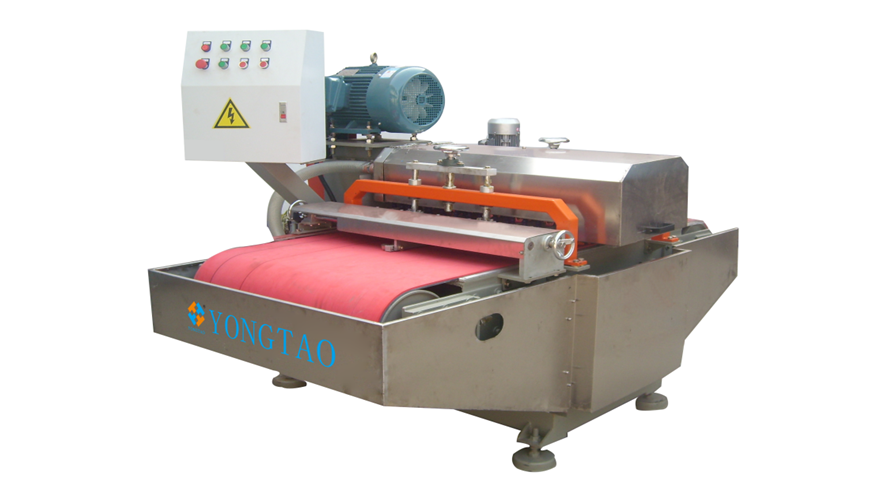
Product introduction
The YTQZ-B/1-800 is an industrial 800mm Ceramic Tile Strip Cutting Machine developed for batch processing of ceramic tiles into multiple parallel strips and for cutting multiple parallel grooves. Its single-spindle structure can be fitted with 7–8 blades, allowing several cutting positions to work during one feeding cycle.
With an 820mm conveyor belt, an adjustable cutting range of 20–800mm and a conveyor speed of 0.8–4.0m/min, the machine is particularly suitable for factories that require repeated strip processing from tiles up to 800mm wide. Blade spacing can be configured with precision spacers and gaskets according to the required strip width or groove layout.
Quick Answer
The YTQZ-B/1-800 is an 800mm Single Spindle Tile Cutting Machine designed primarily for two operations: cutting ceramic tiles into multiple parallel strips and creating multiple parallel grooves.
A single spindle supports a 7–8 blade configuration. The positions of the blades are arranged according to the required finished dimensions. During production, the conveyor continuously feeds the tile through the cutting area, allowing several parallel cutting lines to be processed in one cycle.
The standard machine has an 820mm conveyor belt, a 20–800mm cutting range, a maximum cutting thickness of 20mm and an adjustable conveyor speed of 0.8–4.0m/min.
What Is the YTQZ-B/1-800 Used For?
Unlike a machine intended mainly for small-piece processing, the YTQZ-B/1-800 focuses on wide-format ceramic tile strip production and repeated parallel cutting.
Its two primary applications are:
• Cutting ceramic tiles into multiple strips
• Cutting multiple parallel grooves in ceramic tiles
• Processing repeated strip widths in batch production
• Producing different strip widths by changing blade positions
• Processing tiles with a working width of up to 800mm
• Continuous industrial processing where consistent blade spacing is required
This makes the machine suitable for production environments where one tile must be processed along several parallel cutting lines rather than making each cut separately.

Two Main Processing Modes
Ceramic Tile Strip Cutting
For strip production, several blades are installed on the same spindle and positioned according to the required finished widths.
The tile is placed on the conveyor and continuously fed through the blade group. Multiple blades operate on the material at different positions during the same feeding cycle, allowing the machine to divide the tile into several parallel strips.
As a Ceramic Tile Strip Cutting Machine, the YTQZ-B/1-800 is particularly useful when the same strip specification needs to be produced repeatedly.
The finished width is determined by the actual distance between adjacent cutting positions. Blade thickness and cutting kerf must be included when calculating the spacer arrangement; the nominal distance between blades should not be treated automatically as the final finished dimension.
Before batch production, sample strips should therefore be cut and measured.
Multiple Parallel Groove Cutting
The same multi-blade configuration can also be used when the production requirement is to make several parallel grooves rather than completely separate the tile into individual strips.
For this application, the blade positions are arranged according to the required number of grooves and the center-to-center spacing specified for the finished product.

As a Ceramic Tile Multi-Groove Cutting Machine, the YTQZ-B/1-800 allows several grooves to be processed in parallel during one feeding cycle. This is especially useful for repeated ceramic tile production where groove position and spacing must remain consistent across a batch.
Groove configuration should be confirmed according to the tile, blade specification, required groove spacing and required processing depth. A trial piece should always be inspected before continuous production.
Single-Spindle Multi-Blade Cutting Structure
The YTQZ-B/1-800 uses one powered cutting spindle rather than multiple cutting stations.
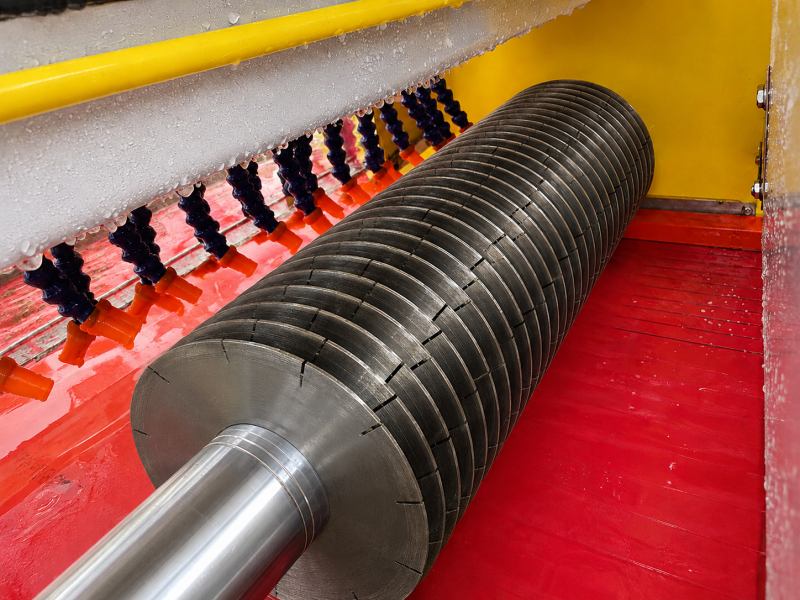
7–8 Blade Configuration
The spindle can be configured with approximately 7–8 cutting blades according to the required processing layout and confirmed working conditions.
This configuration enables the machine to operate as a Multi-Blade Ceramic Tile Cutting Machine, with several parallel cutting positions working during the same feeding cycle.
The final number of blades used in production should be determined according to:
• Required strip or groove spacing
• Blade diameter and thickness
• Original tile dimensions
• Cutting depth
• Material condition
• Spindle load
• Required edge quality
• Cooling conditions
Using more blades does not automatically mean better production performance. The final arrangement should balance cutting load, blade condition, cooling and the required finished dimensions.
Adjustable Blade Spacing
Spacers and gaskets are installed between the cutting blades to establish the required cutting positions.
Changing this arrangement allows the same machine to process different strip widths without changing the basic single-spindle structure.
For repeat orders, recording the confirmed blade, spacer and gasket arrangement can also reduce setup time when the same finished specification is produced again.
Continuous Conveyor Feeding
The machine uses a conveyor to move ceramic tiles steadily through the cutting area.
The standard conveyor speed is adjustable from 0.8 to 4.0m/min. The appropriate production speed should be selected after considering tile condition, thickness, blade quantity, cutting depth and required finished-edge quality.
The highest available conveyor speed should not automatically be considered the correct cutting speed for every application.
How the Cutting Process Works
Step 1 – Confirm the Finished Specification
Determine the required strip width or multiple-groove layout before installing the blades.
For strip cutting, calculate the required cutting positions from the desired finished strip dimensions.
For multi-groove processing, confirm the groove quantity, position and required spacing.
Step 2 – Configure the Blade Positions
Install the selected blades on the single spindle and use suitable spacers and gaskets to establish the required distances.
Blade kerf must be considered when finished strip dimensions are important.
Step 3 – Perform a Trial Cut
Before starting continuous production, process a sample tile using the planned configuration.
Measure the resulting strip widths or groove positions and inspect the cutting condition.
Step 4 – Correct the Setup if Necessary
If the sample dimensions do not match the production requirement, check the spacer arrangement, blade thickness, cutting position and material setup.
Production settings should be corrected before processing a full batch.
Step 5 – Begin Continuous Production
After the trial sample has been approved, the confirmed configuration can be used for repeated production.
Stable material feeding, adequate cooling and regular blade inspection should be maintained throughout the batch.
Technical Specifications of YTQZ-B/1-800
Model: YTQZ-B/1-800
Number of Cutting Heads: 1
Spindle Configuration: Single spindle
Typical Blade Configuration: 7–8 blades
Conveyor Belt Width: 820mm
Blade Diameter: Φ150–300mm × 60mm
Main Motor Power: 15 / 18.5 / 22 / 30kW
Conveyor Motor Power: 0.75kW
Conveyor Speed: 0.8–4.0m/min
Lifter Motor Power: 0.75kW
Cutting Width: 20–800mm
Maximum Cutting Thickness: 20mm
Machine Dimensions: 2.11 × 1.78 × 1.63m
Machine Weight: Approximately 1500kg
Water Consumption: Approximately 300L/min
Main Applications: Ceramic tile strip cutting and multiple parallel groove cutting
Final blade quantity, motor configuration and processing settings should be confirmed according to the material, required finished dimensions and actual production conditions.
Why Use an 800mm Single-Spindle Configuration?
The YTQZ-B/1-800 is intended for manufacturers that need the processing width of an 800mm machine but do not require several independent spindle stations.
As an 800mm Single Spindle Tile Cutting Machine, it combines a wide working range with a relatively straightforward cutting arrangement.
The single spindle carries several blades, while the conveyor provides continuous feeding. This makes the machine especially suitable for standardized jobs where identical strips or parallel cutting positions must be repeated over a production batch.
For customers comparing equipment, the selection should be based on the original tile width, required finished dimensions, number of simultaneous cutting positions and expected production volume rather than processing width alone.
Cutting Quality and Setup Control
Stable production depends on more than the machine specification. Blade arrangement and operating conditions must match the actual material and finished-product requirement.
Blade Spacing and Cutting Kerf
The distance established by spacers and gaskets determines the cutting layout, but actual finished dimensions are also influenced by blade kerf.
When dimensional consistency is important, the correct procedure is to calculate the initial configuration, perform a trial cut, measure the finished piece and then make the necessary correction.
Blade Condition
Worn, damaged or unsuitable blades can affect cutting load and edge condition. Blades should be inspected before important production batches and replaced when their condition no longer meets the required processing standard.
Feeding Speed
The 0.8–4.0m/min conveyor range provides adjustment for different processing conditions.
A suitable feeding speed should be established during trial cutting. If edge quality changes during production, feed speed and blade condition should be checked before continuing the batch.
Cooling Water
Cooling water helps control cutting temperature and remove debris from the cutting area. The standard specification lists approximately 300L/min water consumption.
Water delivery to the cutting area should be checked before continuous production, especially when several blades are operating at the same time.
Who Should Choose the YTQZ-B/1-800?
The machine is suitable for factories that regularly process ceramic tiles into repeated strips or require several parallel grooves in one feeding cycle.
It is particularly relevant when:
• Original tiles require an 800mm processing range
• Several parallel cutting positions are required
• Strip widths need to be changed through blade-spacing adjustment
• Repeated batch production is more important than frequent one-off custom cutting
• A single-spindle configuration is sufficient for the required production volume
For projects with uncertain tile condition or finished specifications, providing actual material samples and required dimensions before final machine configuration is recommended.
YTQZ-B/1-800 FAQ
Can the YTQZ-B/1-800 process an 800mm-wide ceramic tile?
Yes. The machine has an 820mm conveyor belt and a specified cutting range of 20–800mm. It is designed for ceramic tile processing up to an 800mm working width. Actual production conditions should still be confirmed according to tile thickness and the required cutting layout.
Can the machine cut several ceramic tile strips at the same time?
Yes. The YTQZ-B/1-800 uses a single spindle that can be configured with approximately 7–8 blades. Several blades create multiple parallel cutting positions during one feeding cycle, making it suitable as an 800mm Ceramic Tile Strip Cutter for repeated strip production.
How is the ceramic tile strip width adjusted?
Strip width is controlled by changing the distance between adjacent blade positions. Spacers and gaskets are used to establish the required arrangement. Because the cutting blade removes material during cutting, blade kerf should be included when calculating the final strip dimension. Trial cutting and measurement are recommended before batch production.
Can the YTQZ-B/1-800 cut multiple grooves in ceramic tiles?
Yes. The machine can be configured for multiple parallel groove processing by arranging several blades at predetermined positions. When used as a Ceramic Tile Parallel Groove Cutting Machine, the groove layout should be confirmed according to groove quantity, spacing, cutting depth, blade configuration and the actual tile.
What is the maximum cutting thickness?
The specified maximum cutting thickness is 20mm. Actual operating conditions should be selected according to the tile, blade configuration, required cutting depth and desired edge condition.
What is the conveyor speed of the YTQZ-B/1-800?
The conveyor speed is adjustable from 0.8 to 4.0m/min. The appropriate working speed depends on the processing configuration. A trial cut should be used to establish suitable production settings instead of automatically operating at the maximum available speed.
How many blades can be installed on the single spindle?
A typical configuration uses 7–8 blades. The final usable arrangement should be confirmed according to blade thickness, spacing, tile dimensions, cutting depth, spindle load and cooling conditions.
What should be provided before confirming the machine configuration?
For accurate configuration, provide the original ceramic tile dimensions, tile thickness, required strip width or groove layout, expected production quantity and finished-product requirements. If cutting quality is particularly important, an actual material cutting test is recommended before the final production configuration is confirmed.
Bring the material. We’ll plan the process.
Send your material, maximum dimensions and production target. We will help you confirm the suitable machine configuration.